

Upflow → Blog → AR collections
Accounts Receivable Insurance: Complete Guide & Alternatives
Quentin Gaudinat
|
November 28, 2025
Generate AI summary


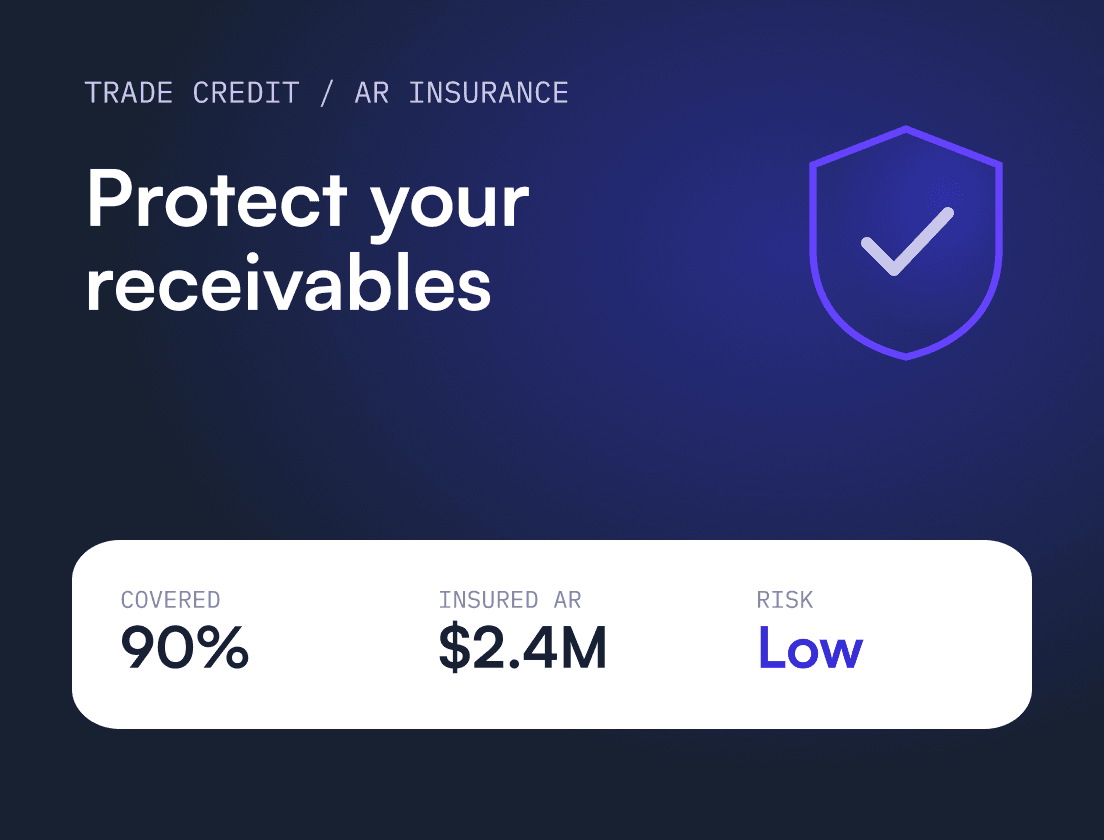
Accounts receivable insurance might not be the first financial protection that comes to mind, but it surely should be one of them. Accounts receivables typically represent a big chunk of a company’s total assets, making them more vulnerable to loss than virtually any other asset category.
The financial impact of customer non-payment can be devastating. For a business operating with a 5% profit margin, a single $100,000 default forces you to generate $2 million in new sales just to recover the lost profit. That’s not just a cash flow hiccup, it’s a potential business crisis.
Accounts receivable insurance functions as a safety net against customer defaults and bankruptcy. Coverage typically ranges from 80% to 100% of the debt amount, but here’s what most businesses miss: insurance works best as part of a broader strategy, not as your only defense.
The most effective approach? Start with solid accounts receivable processes and strong financial relationships with customers. This foundation creates sustainable cash flow before you need insurance coverage. Keep reading to know more about:
- What is Accounts Receivable Insurance and Why It Matters
- Types of Accounts Receivable Insurance Coverage
- How Accounts Receivable Insurance Works
- Alternatives to Accounts Receivable Insurance
Top-performing finance teams don’t just insure against risk, they prevent it. Ready to build stronger AR foundations for your business? Book a call with our experts today.

What is Accounts Receivable Insurance and Why It Matters
Accounts receivable insurance (also known as trade credit insurance) creates a financial buffer between your business and customer payment failures. This specialized coverage protects one of your most valuable assets while opening doors to growth opportunities that might otherwise feel too risky to pursue.
Definition and Purpose
Accounts receivable insurance works as a financial safety net designed specifically to shield your business from commercial debt non-payment. When customers fail to pay due to bankruptcy, insolvency, or simply missing payment deadlines, your policy compensates you up to the insured credit limit.
The coverage extends beyond simple payment defaults. This insurance also protects against losses from damaged or destroyed accounts receivable records. Most policies provide comprehensive protection that covers:
- Reimbursement for uncollectible customer debts
- Interest charges on loans secured by receivables
- Collection expenses exceeding your normal collection costs
- Costs associated with reestablishing accounts receivable records
Why AR Deserves Protection
Think of accounts receivable as your business’s money you’re rightfully owed for goods or services already delivered. These receivables directly impact three critical areas of your operation:
- Working capital efficiency
- Operational effectiveness
- Customer relationships
Accounts receivable management is fundamental to maintaining liquidity, your business’s financial lifeline. These assets can also serve as collateral for securing loans, providing additional financing options to support operations or growth initiatives.
Many companies spend considerable effort protecting against property damage and other unpredictable risks while completely overlooking their substantial AR exposure. This oversight creates a dangerous blind spot since cash flow interruptions from customer defaults often trigger ripple effects throughout your entire operation.
Types of Accounts Receivable Insurance Coverage
Not all accounts receivable insurance policies are created equal. Choosing the right coverage depends on your business model, customer concentration, and risk tolerance.
Whole Turnover Coverage
Whole turnover coverage protects your entire client base: every customer, every invoice, every transaction. This comprehensive approach covers both domestic and international sales, making it the broadest safety net available.
Sometimes called “Comprehensive Credit Insurance,” whole turnover policies work particularly well for businesses with diverse customer portfolios. Here’s what you get:
- Real-time buyer credit assessment for informed trading decisions
- Cost-effectiveness through risk spreading across your entire portfolio
- Steady cash flow maintenance when customers fail to pay
- Protection against both commercial and political risks
The key advantage? You transfer non-payment risk to the insurer, allowing you to focus on operations and growth without worrying about bad debts. This broad protection creates a comprehensive safety net for your accounts receivable portfolio.
Key Accounts Coverage
What if your biggest customers pose your greatest risk? Key accounts coverage focuses exclusively on your largest buyers, the ones whose default would create the most financial damage.
This targeted approach typically covers 2-20 buyers who are specifically approved and endorsed to your policy. The structure includes:
- "Locked-in" credit limits that can't be changed during the policy period
- Low administrative requirements
- Minimal or no deductibles
- Up to 90% indemnity coverage
- Option to request additional buyer limits during the term
Companies use this approach for budgeting and bad debt allocation, essentially creating a cash reserve for catastrophic losses. Premiums can be charged based on either turnover or coverage amount.
Single Buyer Coverage
Some businesses depend heavily on one major customer. Single buyer coverage insures against default from that specific buyer, though you can maintain multiple single-buyer policies for different customers.
This focused protection offers several advantages:
- Extended credit terms to select customers
- Protection against commercial risks (bankruptcy) and political risks
- Pre-shipment coverage for manufacturing costs when political events prevent export
- Improved liquidity through borrowing against foreign receivables
- Flexibility to select specific customers rather than your whole portfolio
Coverage typically ranges from 90% for private buyers to 100% for sovereign buyers, with no first loss deductible.
Transactional Coverage
Need coverage for just one big deal? Transactional insurance operates on a deal-by-deal basis, perfect for businesses with infrequent sales or single-customer relationships.
This selective approach gives you flexibility for:
- One-time large orders
- New customers with limited credit history
- Sales in high-risk markets
- Unusually large transactions
How Accounts Receivable Insurance Works
The process behind accounts receivable insurance involves several connected steps designed to manage credit risk systematically. Understanding how insurers evaluate, monitor, and handle claims helps you decide whether this protection makes sense for your business.
Evaluating Customer Credit Risk
Your insurer becomes your extended credit team the moment you purchase a policy. They assess your customers’ creditworthiness and financial stability using extensive databases, some monitoring over 85 million companies globally. These assessments go beyond basic credit scores.
Insurers analyze payment histories, financial statements, and current market conditions to assign proprietary risk grades to each customer. This analysis forecasts default probability and helps establish appropriate coverage levels. Essentially, you’re gaining access to credit intelligence that would be expensive and time-consuming to develop internally.
Setting Credit Limits and Monitoring
Credit limits flow directly from the risk assessment process. Insurers establish specific limits for each customer based on their financial health and payment patterns. The system remains flexible, you can request additional coverage for specific buyers throughout your policy term.
Continuous monitoring sets insurance apart from static credit policies. Many insurers employ specialized risk analysts and industry-specific underwriters who track your customers’ financial conditions in real-time. This ongoing surveillance catches financial trouble early, allowing you to adjust credit terms before problems escalate.
Filing and Managing Claims
Claims follow structured timelines that vary by situation type. For protracted defaults, essentially slow payments, you typically have up to 180 days from the invoice date to file. Insolvency cases move faster, requiring filing within 10-20 days after bankruptcy notification.
Documentation requirements stay consistent across most policies: purchase orders, contracts, invoices, aging reports, and proof of delivery. After claim approval, you receive indemnity ranging from 80% to 100% of the debt value. The process concludes with you assigning rights to the receivables to your insurer, who then handles collection efforts.
Accounts Receivable Insurance Cost Factors
Premium costs depend on several variables that reflect your specific risk profile:
- Policy structure (whole turnover vs. single buyer coverage)
- Sales volume (higher volumes often secure better rates)
- Deductibles and retentions (higher deductibles reduce premiums)
- Customer risk profiles (high-risk debtors increase costs)
- Industry and geographic considerations
Understanding these factors helps you structure coverage that balances protection with cost-effectiveness.
Alternatives to Accounts Receivable Insurance
Accounts receivable insurance isn’t your only option for protecting cash flow and managing customer payment risks. Several alternatives might better fit your business needs and some could eliminate the need for insurance altogether.
AR Automation & Financial Relationship Platforms
Building strong financial relationships with customers should be your starting point, not insurance.
AR automation and FRM platforms combine automated collection workflows, real-time analytics, and customer payment portals to improve the overall payment experience and accelerate cash collection. The result? Fewer payment issues that would require insurance coverage in the first place.
Upflow is one such platform that focuses on Financial Relationship Management and transforms accounts receivable from a back-office burden into a strategic growth driver.

Accounts Receivable Financing
Need immediate cash from outstanding invoices? AR financing lets you obtain early payment by committing your accounts receivable to a financing company. This approach provides instant cash flow improvement, allowing you to meet obligations without waiting for customer payments.
Asset-based lenders typically advance 70-85% of accounts receivable value, with APRs ranging from 7-17%. Unlike insurance, this gives you working capital today rather than protection against future losses.
Invoice Factoring
Invoice factoring takes a different approach, you sell unpaid invoices at a discount for immediate cash. Factoring companies advance up to 85-90% of invoice value upfront, with fees ranging from 1-5% per month.
The trade-off is significant. While insurance protects against non-payment, factoring provides immediate capital at higher effective costs, sometimes reaching APRs over 40%. Choose factoring when you need cash now, insurance when you want protection later.
Improving Internal Credit Policies
Sometimes the best solution is the simplest one. Upgrading your invoice management process might eliminate the need for external solutions entirely.
Key improvements include:
- Implementing a system for automated reminders
- Adding online payment options to encourage faster payments
- Establishing clear credit terms upfront
- Monitoring customer payment patterns consistently
These changes reduce default risks without ongoing costs, creating a stronger foundation than any insurance policy could provide.

Quentin Gaudinat
Global Sales Director at Upflow
About the Author
Quentin is the Global Sales Director at Upflow, where he helps SaaS companies transform their revenue operations and improve cash flow performance. With hands-on experience advising hundreds of B2B finance teams, Quentin understands what it takes to build scalable financial processes in high-growth environments.
At Upflow, Quentin bridges the gap between sales and finance by enabling businesses to adopt smarter AR practices that accelerate collections and reduce friction in customer relationships. His work centers on helping SaaS leaders leverage automation and data for better financial outcomes.
On the Upflow blog, Quentin shares actionable insights for SaaS operators navigating the evolving finance and tech landscape. He writes about tools, trends, and strategies that help companies choose the right systems, streamline operations, and scale sustainably.

FAQs
Can’t find what you’re looking for?
Ask AI
Accounts receivable insurance safeguards businesses against customer non-payment risks. It compensates companies if customers fail to pay due to bankruptcy, insolvency, or missed payment deadlines, typically covering 80% to 100% of the debt amount.
The main types include whole turnover coverage (protecting the entire client base), key accounts coverage (focusing on largest buyers), single buyer coverage (insuring against a specific customer’s default), and transactional coverage (for individual transactions).
Accounts receivable insurance can improve access to financing by making receivables appear as lower-risk assets to financial institutions. This often leads to larger credit lines, more favorable terms, lower borrowing costs, and greater flexibility in working capital management.
Alternatives include AR automation platforms like Upflow, accounts receivable financing, invoice factoring, and improving internal credit policies. These options can help manage cash flow and customer payment risks without insurance.
With reduced exposure to non-payment risk, businesses can confidently pursue growth opportunities. This includes extending credit to larger customers, entering new markets, offering more competitive payment terms, and expanding sales without proportionately increasing risk.
Related articles