

Upflow → Blog → Payment reminders
How to Write an Invoice Email: Templates & Examples
Quentin Gaudinat
|
March 12, 2026
Generate AI summary


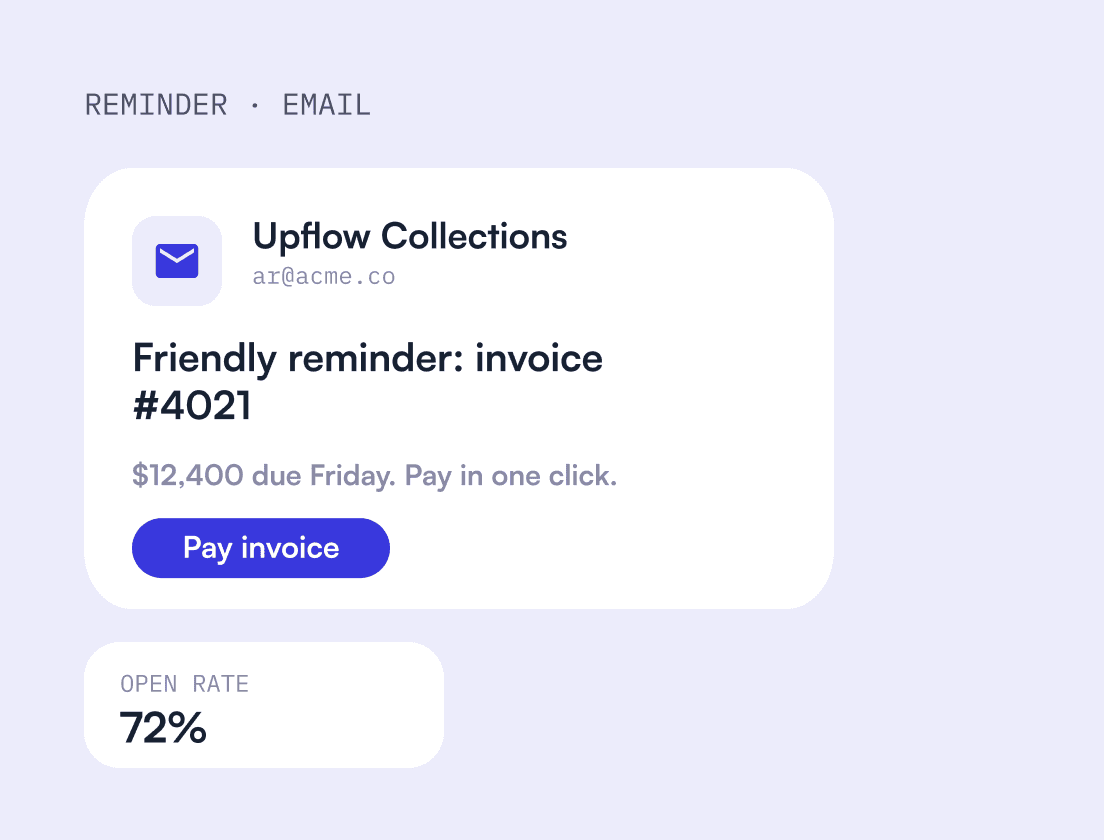
Invoice emails play a crucial role in maintaining healthy cash flow for businesses of all sizes. When an invoice goes unpaid, every day that passes after the due date reduces the likelihood of receiving payment. Sending clear and timely invoice emails helps keep payments top of mind and encourages clients to settle their balance quickly.
A well-written invoice email template makes this process easier. Instead of writing every message from scratch, you can rely on structured templates that communicate payment details clearly while maintaining a professional tone.
In this guide, you will learn:
Want ready-to-use invoice email templates? Download them below and start sending professional payment reminders in minutes.

7 Invoice Email Best Practices
At Upflow, we’re all about efficiency. That’s why we recommend setting some time to map out your current accounts receivable collection workflow. Once you see it clearly, you can work on improving it (or starting it!) with these tips:
Start early: Start contacting your client when their invoice is only a few days overdue. By being reactive, you’ll make sure your invoice payment doesn’t slip away from anybody’s mind.
Be consistent: Sending an invoice reminder email whenever you think about it won’t lead to great collection results. What works best is to have an email workflow with several follow-ups and contact points. A good starting point is one action per week.
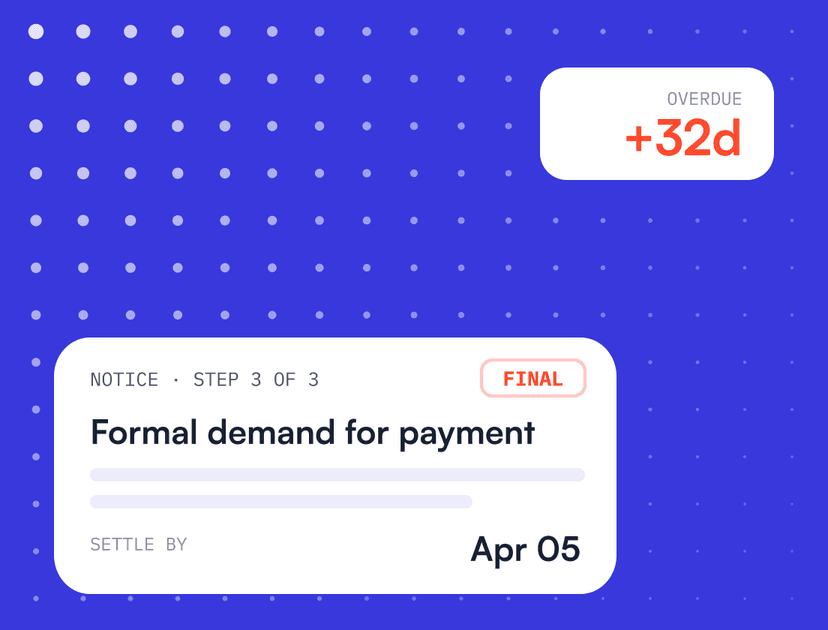
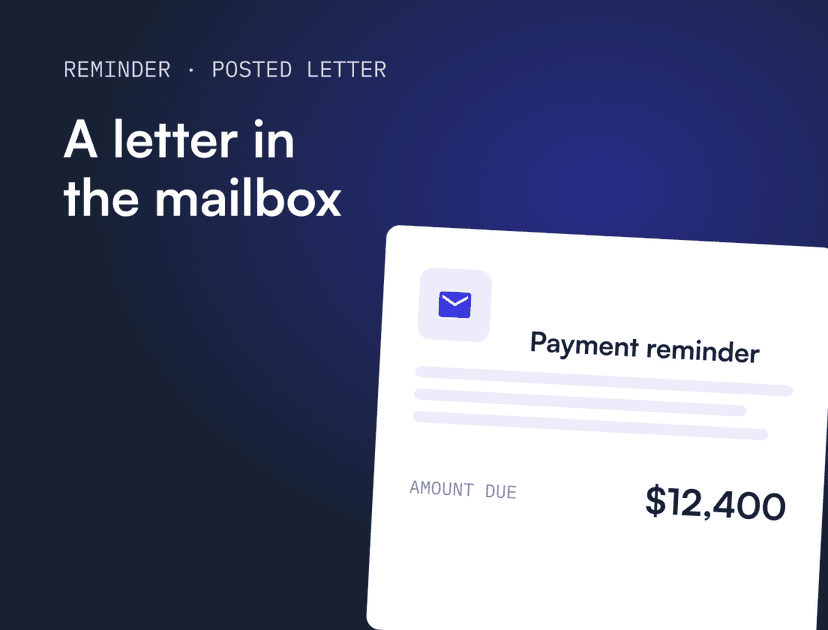
Switch medium: Emails have the advantage of being efficient and personalizable. They’re also easy to ignore (or forget), so it’s best to use several contact points. Our CFO swears by picking up the phone to have a live chat and unstuck any situation. Consider a formal letter of notice too when the situation seems to linger.
Try other contacts: Maybe the contact you have in your client’s company is out of the office, not working there anymore, or simply too busy. You could try to find other relevant contacts by looking at their website, digital portfolio, social profiles and additionally using an email finder to make sure your emails go through. You can also simply call the front desk and ask to speak to the relevant person.
Involve your sales team: We also recommend bringing in your sales representatives or account managers in the collection process. They might have another phone number to use and will be able to check in more personally. On Upflow, you can have an unlimited number of users in your plan, which means collaboration is made easier.
Bring up the legal team: Sometimes just the mention of “legal action” is enough to sort out a situation quickly. You can involve your legal team or send a formal letter as a final notice before escalating it to the next level (like a collection agency)
- Set up different workflows: Design an email sequence specifically for different subgroups (new clients, late payers, corporate clients, etc.). Having ready-to-use templates with clear subject lines means being more efficient, as it saves you time and increases your probability of getting paid.
All in all: be proactive and have an actual payment reminder strategy! Making your accounts receivable collection a priority makes it a priority for your clients, too.
Need more tips? Check out our free email samples to get your past due invoices paid:

What to Include in an Invoice Email?
Regardless of whether you’re sending a friendly reminder or a final notice, every past due invoice email should contain the following elements to ensure clarity and increase your chances of getting paid:
Client and company information: Always include the name of your contact and their company, along with your business name. This helps personalize the message and reminds the recipient of the relationship and service provided.
Your contact information: Make it easy for them to reach you. Include your email address, phone number, and company address either in your signature or within the body of the email.
Invoice details: Reference the original invoice number, the amount due, and the issue date. If there are multiple overdue invoices, list them clearly to avoid confusion.
Due date and number of days overdue: Reinforce urgency by stating the original due date and how many days the invoice is past due. This acts as a subtle prompt to take immediate action.
Updated invoice (if applicable): If you charge late fees or interest, attach an updated invoice with the revised amount and a clear breakdown of any penalties applied.
- Payment instructions: Include straightforward instructions on how to pay — whether it’s a bank transfer, credit card, or online payment link. The fewer the steps, the faster the payment.
Invoice Email Templates
Using a well-written invoice email template helps you save time while maintaining consistent, professional communication with your clients. Instead of writing payment reminders from scratch each time, you can rely on proven templates that clearly communicate invoice details and payment instructions.
Below you’ll find several invoice email templates tailored to different situations, including new clients, recurring late payers, and corporate accounts. You can customize these templates with your invoice number, payment terms, and preferred payment methods to fit your business needs.
Invoice Email Template for New Clients
When new clients don’t pay your invoice on the due date, it can be because they don’t know your process. Your collection emails should consequently focus on educating your clients about your invoice payment terms.
This looks like including a link to your Terms & Conditions and/or the contract you have together. It’s a friendly reminder for them, and it makes sure you’re both on the same page as your business relationship develops.
Another point to take into consideration is that they might encounter some difficulty with your product or service. Maybe their delivery didn’t go as expected, or they’re not making full use of your SaaS platform yet. Whatever it is, it’s important to open up the conversation.
At Upflow, we ask our Sales Executives to make sure the first invoice is collected. It crystallizes their relationship while making sure the transition to the accounting part is as smooth as can be.
If any questions or problems arise, the situation can be brought to immediate attention. By solving any challenging situation quickly in an appropriate time frame, you ensure that the invoice isn’t ignored or disputed later on.
Whether you do the same or not, it’s really important to focus on communication with a new client. Like any new relationship, most problems happen there and they can be down to a misunderstanding. Hence the need to be clear in your communication.
You can send the past due invoice email sample you’ll find below with some personalization and maybe pick up the phone, too, to make sure they’ve received it.
Collection Email Template for New Clients:
Hello (Client Name),
I hope you are making the most (mention your product/service). If not, we are only an email or a phone call away!I am contacting you regarding our first invoice (invoice number) due (invoice due date). Can you confirm you have received it and that it has been transferred to your accounting department?As a reminder and as stated in our T&Cs/contract, we require payment within (number of days).
You can pay via (payment methods – ie bank transfer, online payment, etc.).
Let me know if you have any questions regarding our company processes.
Best wishes,
(Your Name)
(Your contact info)
Invoice Email Template for Late Payers
The great thing about collecting data (as well as money) is that you can identify late payers. If you use an A/R collection tool like Upflow, you have access to different levels of insights regarding your collection process.
That means being able to identify trends or patterns in your client base. It might be that the ones who pay via credit card encounter more failed payments – or the opposite.
All insights you gain will help you design an efficient past due invoice email strategy. Noticing who your late payers are will make a significant difference to your collection process already. Even just noticing who your late payers are can mean increasing your collection process.
Let me explain. By knowing which accounts are more likely to have a late invoice, you can:
- Be proactive in your A/R approach with them,
- Manage your cash flow better.
With late payers, for instance, you want to consider sending due date reminders before their payment due date.
Having dedicated email workflows for late payers means also you’re spending less time writing the same emails.
What’s more, you can experiment and see which phrasing, tone, and frequency lead to the best results. Once you hone in your collection emails, you can automate them and focus on the accounts that need more of your attention, like the invoices in your 90-day overdue collection bracket.
Regarding the content of the emails, with recurrently late payers, you want to be more assertive. Always remain polite of course, but show that you mean business.
You can also offer payment options like a payment plan and specific pricing, or prompt them to automate their payment to make it easier for everyone. This last option makes sense especially if you have a subscription-based business.
Collection Email Template for Late Payers:
Hello (Client Name),
We are contacting you as part of four outstanding invoices follow up. The invoice number (XXX) of (amount due) was due on (due date).
Can you confirm that this invoice has been recorded and give us an estimated payment date?
You will find a copy of the invoice (attached to this email/linked here). To pay this invoice, you can (payment instructions).
You can also choose to switch to credit card payments to automate your future payments. To do so, (specific instructions). Let me know if you have any questions.
Best,
(Your Name)(Your contact info)
Invoice Email Template for Corporate Accounts
Corporate accounts can be tricky to work with as they usually have very specific purchasing and invoicing processes in place. Plus, they are big structures, which means that anything takes more time.
Armed with patience and a good email sample, however, you will be able to tackle any level of bureaucracy!
If a corporate account has outstanding invoices, it is best to let them know earlier rather than later. Internal communication can take time and even more if someone happens to be Out of Office.
In order to get paid quickly, make sure to send the relevant information they need in your past due invoice emails:
- The original invoice with the invoice number, amount due, a description of service/product provided, and the original due date.
- An updated invoice with a late fee if you charge one.
Your payment terms as a reminder, as well as the different payment options you offer.
- Your contact information: This includes your name, company name, email and even phone number in some cases or simply create a QR code and add to your electronic business card. Include them on the invoice and in the body of the email as they can get separated in their internal process.
Even more than with new clients, it is good to work in collaboration with your Sales Team to deal with corporate accounts.
For one, they have more insights into how their business operates. They know how to navigate the different departments and are likely to have different contacts within the company. Your sales representative can also check in more easily with them via email, a phone call, or even a lunch meeting.
Email sample for corporate clients:

Dear (Client Name),We are contacting you as part of our outstanding invoices collection. You currently have an outstanding balance of (XXX), of which (XXX) are overdue.Your company has not paid yet the following invoices that are past due: You will find a copy of the aforementioned invoices attached to this email. We would appreciate a swift payment. To pay your balance, you can (payment methods).If you have any questions or problems, you can reply to this email or contact (Sales Representative/Account Manager name) in copy of this email.
We look forward to hearing from you.Regards,
(Your Name)(Your contact info) P.S: if you’re not the person to contact for this matter, can you please forward this email to the relevant person in your company?
Want even more personalized email reminders and live data about your AR? Try Upflow! We will reduce your late payments up to 50%.


Quentin Gaudinat
Global Sales Director at Upflow
About the Author
Quentin is the Global Sales Director at Upflow, where he helps SaaS companies transform their revenue operations and improve cash flow performance. With hands-on experience advising hundreds of B2B finance teams, Quentin understands what it takes to build scalable financial processes in high-growth environments.
At Upflow, Quentin bridges the gap between sales and finance by enabling businesses to adopt smarter AR practices that accelerate collections and reduce friction in customer relationships. His work centers on helping SaaS leaders leverage automation and data for better financial outcomes.
On the Upflow blog, Quentin shares actionable insights for SaaS operators navigating the evolving finance and tech landscape. He writes about tools, trends, and strategies that help companies choose the right systems, streamline operations, and scale sustainably.


FAQs
Can’t find what you’re looking for?
Ask AI
A strong invoice email should include the key payment details and clear instructions. Typically, an invoice email should contain:
– The invoice number and amount due
– The original due date
– A copy or link to the invoice
– Clear payment instructions
– Your contact details in case of questions
For new clients, it is also helpful to include a link to your Terms & Conditions or contract.
Your subject line should be clear, direct, and professional so clients immediately understand the purpose of the email. Examples include:
– Invoice #12345 Payment Due
– Friendly Reminder Invoice #12345 Past Due
– Second Notice Overdue Payment Invoice #12345
Avoid aggressive language. A clear and professional subject line encourages faster responses.
Accounts receivable automation tools like Upflow help businesses automate invoice reminders and follow-ups. These tools allow you to:
– Create automated email workflows for different client segments
– Send reminders based on invoice due dates
– Track payment behavior and email performance
– Collaborate with finance and sales teams
Automation helps reduce manual work and improves your chances of getting paid on time.
When dealing with recurring late payers, it helps to create a structured follow-up workflow that includes:
– Payment reminders before and after the due date
– Clear and firm language in follow-up emails
– Payment options such as payment plans or auto-pay
– Consistent follow-ups until the invoice is paid
Automation tools can help manage these reminders and reduce the time spent chasing payments.
Yes. Using an invoice email template helps you request payment clearly and professionally while saving time. Templates ensure you include all important details such as the invoice number, amount due, due date, and payment instructions. You can customize the template depending on the situation, such as new clients, late payers, or corporate accounts.
Related articles