

Upflow → Blog → SaaS Finance
What Is a Fractional CFO? Role, Cost and Hiring One in 2026
Alex Louisy
|
July 8, 2026
Generate AI summary


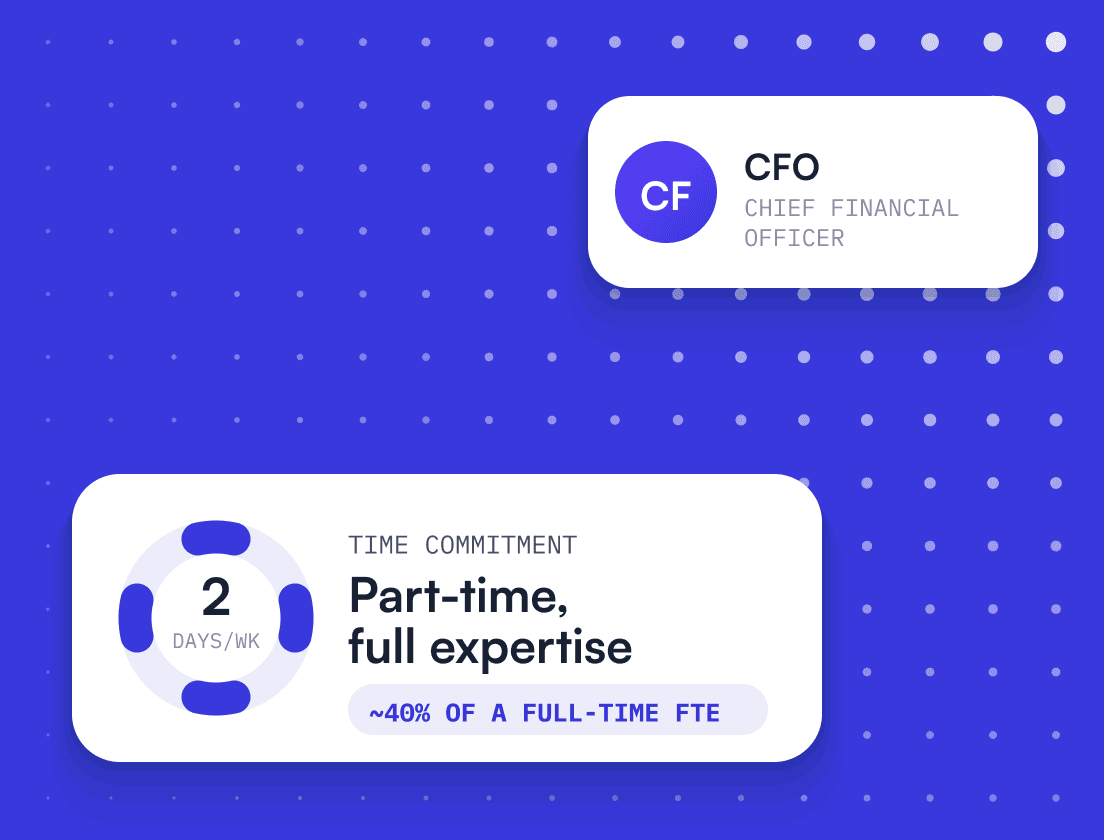
A fractional CFO is a finance expert who provides CFO-level strategy and financial leadership on a part-time or contract basis. For startups and growing businesses that need senior financial guidance but are not ready for a full-time hire, it is one of the most practical options available.
As companies scale, managing finance becomes more complex. Cash flow tightens, reporting demands increase, and bigger decisions carry greater risk. Yet many businesses are not ready to commit to a full-time Chief Financial Officer.
In these situations, a fractional CFO can be an invaluable asset, bringing high-level financial strategy and operational guidance while keeping costs flexible.
Few people understand this role better than Lauren Pearl, a seasoned fractional CFO who has helped countless founders move from financial chaos to clarity. In this guide, featuring Lauren’s expert insights, we’ll explore:
- What Is a Fractional CFO?
- What Does a Fractional CFO Do?
- Fractional CFO Services: What's Typically Included
- Fractional CFO vs Full-Time CFO
- Fractional CFO Cost and Pricing
- Pros and Cons of Hiring a Fractional CFO
- How to Hire a Fractional CFO
- Before You Hire a Fractional CFO
If you’re starting to feel that finance is becoming a bottleneck, now’s the time to explore smarter systems that lay the groundwork, before you bring in a fractional CFO.

What Is a Fractional CFO?
A fractional CFO is a finance expert who provides CFO-level strategy and financial leadership on a part-time or contract basis. For startups and growing businesses that need senior financial guidance but are not ready for a full-time hire, it is one of the most practical options available.
Fractional CFO Definition
A fractional CFO is a senior finance executive who provides CFO-level services to a business on a part-time or contract basis. Rather than joining as a permanent hire, they work with companies for a defined number of hours per week or month, covering financial strategy, planning, and operations.
The model exists to solve a specific problem: many businesses reach a point where basic accounting is no longer enough, but they are not ready to commit to a full-time Chief Financial Officer. A fractional CFO fills that gap, bringing strategic financial leadership at a cost and commitment level that matches where the business actually is.
For founders trying to get a handle on their numbers before bringing in senior finance support, understanding key SaaS financial metrics is a good place to start.
How the Role Has Evolved
The fractional CFO model has changed a lot over the past few years. Lauren Pearl, a seasoned fractional CFO who has helped countless founders move from financial chaos to clarity, puts it this way:
What was once a clearly defined strategic role has become a broad label. Some fractional CFOs focus strictly on financial planning and high-level decision support. Others offer more operational or hands-on financial management. And some providers use the title to describe work that is closer to bookkeeping or financial control than true CFO-level strategy.
Fractional CFO vs. Controller vs. Bookkeeper
This fragmentation matters when you are trying to hire the right person. The terms fractional CFO, financial controller, and bookkeeper are sometimes used interchangeably by providers, but they describe very different roles.
Lauren Pearl
CFO Advisor and Fractional CFO
When evaluating candidates, Lauren recommends looking past the title:
The practical rule: if you need bookkeeping, hire a bookkeeping firm. If you need someone to own your month-end close and financial reporting, hire a controller. If you need someone helping you think through your next raise, your hiring plan, or whether your unit economics hold, that is a fractional CFO.
What Does a Fractional CFO Do?
Fractional CFOs can handle many of the same tasks as a full-time CFO, providing strategic insight and operational guidance. Some of the key areas they help with include:
1. Financial Strategy and Forecasting
A fractional CFO helps businesses set realistic financial goals and create long-term strategies to achieve them. They work closely with leadership teams to develop detailed forecasts, ensuring the business can handle future challenges while achieving growth targets.
But for founders, especially first-time CEOs, this process shouldn’t feel like outsourcing a spreadsheet. Lauren believes that the best fractional support doesn’t just work from a template or build the model for you, it integrates your thinking into the model itself.
2. Cash Flow Management
One of the primary concerns for startups and small businesses is cash flow. Even profitable companies can face financial distress if cash flow is not managed properly. A fractional CFO can develop systems to monitor and manage cash flow, ensuring that the business has the liquidity needed to meet obligations while also planning for future needs. Cash flow mismanagement is one of the top reasons startups fail, making it a critical focus area for any growing business.
Lauren highlights the importance of building strong cash flow practices early on:
This is where Upflow plays a vital role. Upflow helps businesses streamline and automate accounts receivable (AR) processes, ensuring timely payments, reducing outstanding invoices, and improving overall cash flow predictability.
By implementing Upflow’s solutions, businesses can minimize manual work, avoid unnecessary financial strain, and create a cash-positive environment that supports long-term growth.
A well-managed cash flow system allows a fractional CFO to focus on high-level strategic decisions rather than firefighting liquidity issues. When your cash flow is stable and predictable, your CFO can dedicate their expertise to scaling operations, optimizing financial performance, and driving sustainable profitability.
3. Financial Reporting and Metrics
Fractional CFOs help set up and refine a company’s financial reporting from building dashboards to establishing KPIs and monthly reporting cycles. Clear reporting helps founders and leadership teams make decisions based on data rather than gut feel.
But reporting isn’t just about building a dashboard, it’s about building discipline. Lauren’s approach emphasizes simplicity and strategic focus.
Lauren Pearl
CFO Advisor and Fractional CFO
A strong CFO ensures the right people are looking at the right numbers, on the right cadence, turning reporting into a habit that keeps everyone focused on hitting your goals.
4. Scenario Planning and Decision Support
Fractional CFOs act as strategic sounding boards, helping founders think through critical business decisions, from hiring plans and product bets to pricing shifts or new customer segments.
This support often comes in the form of scenario planning, modeling “what if” situations to help leadership assess tradeoffs and make smarter calls. Whether you’re wondering if you can afford your next hire, building a new product, exploring if you can sell digital products as an additional revenue stream, or wondering if a new market is worth entering, fractional CFOs can use scenario planning to help you make the call.
Lauren adds value by embedding herself in the way founders think, rather than just plugging variables into a spreadsheet.
5. Fundraising and Investor Communications
Fractional CFOs often play a key role in fundraising, preparing financial models, refining the pitch, and answering due diligence questions. For startups without in-house finance teams, this support is essential to running a smooth process.
Lauren’s approach goes beyond deck support – she helps founders connect the financials to their strategic story.
That might mean helping articulate the strategy behind the numbers or sitting in on calls to field investor questions. Every raise is different, and the best CFOs are the ones who can flex to support the founder, not just the financials.
6. Building Your FinStack: Tools, Team, and Workflow
As companies grow, finance needs shift from scrappy survival to scalable systems. Fractional CFOs often take the lead in building out what Lauren calls a company’s FinStack – the right mix of people, tools, and workflows that support sustainable growth.
This includes evaluating and implementing financial operations software (like AP/AR automation, ERP software, benefits & payroll management, etc) and hiring or managing outsourced and in-house finance support from bookkeepers and accountants to internal finance analysts.
Lauren works with founders to right-size their finance function: automating where it makes sense, hiring when necessary, and building lightweight systems that won’t break when the company doubles in size.
Fractional CFO Services: What's Typically Included
Most founders come to a fractional CFO with a specific pain point, a fundraise coming up, a cash flow problem, or a finance function that has outgrown spreadsheets. What they get, however, is usually broader than they expected. Fractional CFO services span strategy, operations, and financial infrastructure, scoped to what the business actually needs at that moment.
Common Fractional CFO Engagement Models
Fractional CFOs typically work under one of three engagement models:
Hourly is best for ad hoc support, specific projects, or early-stage companies that need occasional strategic input without an ongoing commitment.
Monthly retainer is the most common model for growing businesses. A set number of hours per month dedicated to financial planning, reporting, and decision support. Retainers typically range from $5,000 to $20,000 per month depending on scope and experience.
Project-based engagements are common for defined deliverables like fundraising preparation, financial model builds, or a one-time finance process setup. Engagement ends when the project does.
Most companies start with a retainer and adjust the scope as the business evolves. A good fractional CFO will tell you which model makes sense for where you are, and be upfront if the scope you need does not match the budget you have.
Fractional CFO for Startups
Fractional CFOs are particularly well suited to startups and early-stage SaaS businesses. At this stage, the finance function is often a founder wearing multiple hats, and the gaps, whether in cash flow analysis, revenue recognition, or investor reporting, tend to compound quickly.
A fractional CFO brings structure without the overhead of a full-time executive hire. They can help you build your first financial model, set up a reporting cadence, prepare for a seed or Series A raise, and put the right finance stack in place before the business outgrows what you have.
The key advantage at the startup stage is speed. An experienced fractional CFO has seen these problems before and does not need months to get up to speed. They assess quickly, prioritize what matters, and start adding value from the first few weeks.
What a Fractional CFO Is Not Responsible For
Understanding the boundaries of the role is just as important as knowing what is included. A fractional CFO is not a replacement for a bookkeeper or accountant. They are not going to reconcile your accounts, process payroll, or manage your accounts receivable day to day.
Their focus is strategy and decision support. The operational layer, the people doing the day-to-day finance work, sits separately. In fact, one of the first things a good fractional CFO will do is help you figure out who else you need on the finance team and what tools you need to support them.
Fractional CFO vs Full-Time CFO
As companies grow, founders eventually face a critical question: do we need a CFO, and if so, should it be full-time or fractional? While both roles provide financial leadership, the scope, cost, and timing differ significantly.
Key Differences
| Fractional CFO | Full-Time CFO |
|---|---|
| Part-time or contract engagement | Permanent executive hire |
| Flexible scope based on business needs | Oversees finance function daily |
| Typically $5,000 to $20,000 per month | $200,000 to $400,000 or more in total annual compensation including bonus and equity |
| Focused on strategic guidance and high-level decisions | Combines strategy with team management and operational oversight |
| Ideal for early-stage and scaling startups | Best suited for later-stage companies with complex finance teams |
A fractional CFO is typically engaged for a set number of hours per week or month. Their focus is on strategic direction, forecasting, fundraising support, and decision-making guidance. They are especially valuable when a company needs senior financial thinking but not a full-time executive.
A full-time CFO becomes part of the executive team and manages the finance department day to day. They oversee internal staff, own board reporting, manage investor relationships, and build long-term financial infrastructure.
When to Hire a Fractional CFO
Many fast-growing startups are not ready for a full-time CFO but are clearly outgrowing basic accounting support. You might consider a fractional CFO if you are:
- Scaling rapidly but lack financial leadership
- Preparing for fundraising or acquisition
- Struggling with cash flow visibility
- Making high-stakes hiring or pricing decisions
- Feeling overwhelmed by financial questions you cannot confidently answer
As Lauren puts it:
When to Go Full-Time
For many startups, a fractional CFO offers the right balance of experience, flexibility, and cost control at a critical stage of growth. But there comes a point where the business outgrows the model.
If your company is generating predictable revenue, managing a growing finance team, and facing complex regulatory or operational requirements, a full-time CFO is likely the better long-term fit. Other signals include needing someone embedded in the business daily, managing a large finance function with multiple direct reports, or preparing for an IPO or major acquisition where a permanent executive presence is expected.
The transition from fractional to full-time is not a failure of the model. It is the model working as intended, getting the business to a stage where a full-time hire makes sense.
Fractional CFO Cost and Pricing
Cost is usually one of the first questions founders ask when exploring fractional CFO support. The honest answer is that it varies quite a bit, based on experience, scope, and industry. But there are useful benchmarks, and understanding what drives pricing helps you evaluate candidates more clearly.
Fractional CFO Hourly Rates
Hourly rates for fractional CFOs typically range from $200 to $700 per hour, with premium or urgent engagements going higher. Zanda Recruiting reported that in 2023, the average hourly rate sat between $232 and $358 per hour.
Lauren Pearl
CFO Advisor and Fractional CFO
Monthly Retainer Costs
For most ongoing engagements, fractional CFOs work on a monthly retainer. Expect to pay between $5,000 and $20,000 per month, depending on the scope of work and the seniority of the person you bring in. Daily rates, for project-based or intensive work, typically run $1,000 to $3,000 per day.
Lower rates often signal a mismatch between what is being offered and what you actually need. If someone is charging bookkeeping rates but calling themselves a fractional CFO, that is worth investigating before you sign anything.
How Fractional CFO Rates Compare to a Full-Time CFO Salary
The cost comparison with a full-time CFO is where the fractional model becomes compelling for most early-stage businesses. A full-time CFO at a growth-stage company typically commands a total compensation package of $200,000 to $400,000 or more per year, including salary, bonus, benefits, and equity.
A fractional CFO on a $10,000 per month retainer works out to $120,000 per year, and that is before accounting for the fact that you are only paying for the hours and scope you actually need. For a business that does not yet require a full-time finance executive, that gap is significant.
It is also worth noting that a fractional CFO can help you figure out exactly when the full-time hire makes sense, so you are not making that call too early or too late.
What Affects Pricing
A few factors that move the number up or down:
Experience and track record: A CFO with a history of leading companies through Series B raises or complex M&A will cost more than someone earlier in their career. The premium is usually worth it if the stakes are high.
Scope and hours: More hours, more complexity, and more stakeholder management all push the retainer higher.
Industry: CFOs with deep experience in SaaS, fintech, or other specialized sectors tend to command higher rates than generalists. For a SaaS business, understanding SaaS accounting nuances like deferred revenue and subscription management is table stakes, and you want someone who already knows that landscape.
Stage of business: The more complex the finance function, the higher the engagement cost.
Pros and Cons of Hiring a Fractional CFO
A fractional CFO can be transformative for the right company. But like any strategic hire, there are tradeoffs.
Pros
1. Access to Senior-Level Expertise
You gain strategic financial leadership without committing to a full executive salary. Many fractional CFOs bring experience as full-time CFOs, operators or investors.
2. Cost Efficiency
Instead of a $250,000+ annual compensation package, you can right-size the engagement to your needs and budget.
3. Flexibility
Engagements can expand or contract depending on fundraising cycles, growth phases or operational complexity.
4. Objective Perspective
Because they are not embedded in internal politics, fractional CFOs can provide clear-eyed advice and challenge assumptions when needed.
5. Faster Impact
Experienced fractional CFOs are used to stepping into messy environments. They assess quickly, prioritize effectively and focus on what moves the needle.
Cons
1. Limited Availability
They are not in the office full-time. Urgent issues may require scheduling rather than immediate response.
2. Variability in Quality
As Lauren points out, the term fractional CFO has become fragmented. Some providers focus on bookkeeping or controller work while charging strategic rates.
3. Less Operational Ownership
A fractional CFO may design systems and strategy but execution often depends on internal staff or outsourced partners.
4. Not a Long-Term Replacement for a Full-Time Leader
At later stages, companies often need a dedicated executive fully embedded in the business.
The key is clarity. If you need bookkeeping, hire a bookkeeping firm. If you need true strategic leadership, hire someone with experience running finance at your stage and in your industry.
How to Hire a Fractional CFO
Hiring a fractional CFO should feel closer to hiring an executive than hiring a contractor. This person will see everything in your company. They may speak to your board, join investor calls, and help shape your strategy.
Lauren advises founders to approach the process carefully:
Where to Find a Fractional CFO
- Referrals from founders or investors
- CFO search firms that specialize in fractional placements
- Platforms such as LinkedIn, Toptal, or curated executive networks
What to Look for When Vetting Candidates
When evaluating candidates, look for:
- Experience as a full-time CFO in your industry
- Experience as an operator, investor, or banker
- A clear explanation of how they scope engagements
- The ability to communicate financial concepts clearly
- References from founders at a similar stage
A CPA credential alone is not sufficient. Strategic finance requires experience running companies and making high-stakes decisions.
Questions to Ask Before You Commit
Most founders spend too little time on this part. A few questions worth asking any fractional CFO candidate before you sign:
What does your typical engagement look like for a company at our stage? This surfaces whether they have relevant experience or are pitching a generic service.
How do you handle it when priorities shift mid-engagement? Startups move fast. You want someone who can adapt, not someone who sticks rigidly to a pre-agreed scope when the business needs something different.
What does your reporting cadence look like? How often will you meet, what will you review, and how will decisions get documented.
Who else is on your team or in your network? A good fractional CFO is rarely working alone. They should have bookkeepers, accountants, and finance stack specialists they trust and can bring in when needed.
Fractional CFO for Startups
The hiring process looks slightly different at the early stage. Pre-seed and seed companies often do not have a formal finance function at all, which means the fractional CFO is not just filling a gap but building the foundation from scratch.
At this stage, prioritize someone who has worked with companies at a similar size and funding level. Their ability to forecast cash flow, set up basic reporting, and help you think through your burn rate matters more than deep expertise in complex financial instruments or public company reporting.
Before You Hire a Fractional CFO
Bringing on a fractional CFO is a big step. But before you hand over your company’s financials, you should understand them yourself.
That is hard to do when your accounts receivable and collections data live in five different places. Your ERP shows one thing. Your accounting software shows another. Billing sits in a separate tool. Sales activity is in Salesforce. Payment promises are buried in Slack threads. Finance, sales, and customer success each hold part of the story, but no one sees the full picture.
When your data is scattered across tools and teams, clarity is impossible.
This is why centralizing your AR operations matters. Upflow pulls your receivables data into one place, orchestrates collections workflows, reduces manual follow-ups, and gives you real-time visibility into who owes you what and why. Instead of chasing information, you get a clear, reliable view of your cash position and customer payment behavior.
If you don’t put this foundation in place, guess what happens during your fractional CFO’s first week? They consolidate data, clean up reporting, map out processes, and try to piece together your true AR performance.
In other words, you are paying executive-level rates for foundational cleanup that should have already been handled.
With Upflow, that groundwork is handled before a fractional CFO ever logs in, so when you do bring one on, they can focus on strategy, forecasting, and growth rather than cleanup.
Want to see what that looks like in practice? Discover Upflow for free and get full visibility into your receivables before you hire your next financial leader.


More on Lauren Pearl
Few people understand this better than Lauren Pearl, founder of Lauren Pearl Consulting (L.P.C.). A numbers-driven strategist, Lauren built L.P.C. to be the finance partner she wished she had as a former founder, COO, and Chief of Staff. She helps startups move from chaos to clarity with scalable systems, clear financial planning, and trusted tools.
“L.P.C started as a side project, but it quickly became clear there was a huge need: The part-time CFO market was full of controllers and accountants. But founders didn’t care about perfect books, they needed a strategic financial thought partner who understood both the operations and the chaos of startup life. I’d been in that seat myself as a founder, COO, and Chief of Staff, so I built LPC to be the kind of finance resource I wished I’d had.”
Lauren helps founders clear blockers, structure their path forward, and set up scalable financial systems that support long-term growth. The results speak for themselves:
“Only 18% of first-time founders succeed. Since L.P.C.’s inception, 85% of my paying clients have closed funding or become significantly more profitable.”
Lauren also co-hosts The Growth-Minded CFO podcast, powered by Upflow, engaging with finance and business leaders to explore innovative approaches to financial leadership.

Alex Louisy
Co-founder and CEO of Upflow
Alex is the Co-founder and CEO of Upflow, where he leads the company’s mission to revolutionize how B2B businesses manage their cash flow. Backed by top-tier investors like Hedosophia, YCombinator, Hexa, and Lorimer Ventures, with more than $25m in funding to date, he is a strong advocate for financial transparency and operational excellence, bringing a founder’s perspective to the biggest challenges and opportunities in modern revenue management.
Alex developed Upflow’s widely recognized “5 Maturity Stages of Cash Collection” framework, a model that has helped hundreds of companies build scalable and efficient finance operations. He also co-hosts The Growth-Minded CFO podcast, where he engages with finance and business leaders on innovative approaches to financial leadership. His thought leadership explores the intersection of business strategy, financial discipline, and organizational growth.
As a regular contributor to Upflow’s blog, Alex shares insights on leadership, scaling SaaS businesses, and the future of B2B finance. His writing helps founders, CFOs, and revenue leaders make smarter decisions and build financially resilient companies.

Summary

Shared
FAQs
Can’t find what you’re looking for?
Ask AI
A fractional CFO provides part-time strategic financial leadership, while a full-time CFO manages day-to-day financial operations as a permanent executive. Fractional CFOs are ideal for businesses that need high-level support without the cost of a full-time hire.
Rates vary based on experience and scope. Expect to pay $200 to $700 per hour, or $5,000 to $20,000 per month. Lower rates often signal less strategic support or misaligned services.
Fractional CFOs do not draw a salary in the traditional sense since they work on a contract or retainer basis rather than as permanent employees. From the provider’s side, experienced fractional CFOs typically charge $200 to $700 per hour, or work on monthly retainers ranging from $5,000 to $20,000 depending on scope and the complexity of the engagement. More experienced operators with a track record in high-growth or venture-backed companies tend to sit at the higher end of that range.
For most growing businesses that need senior financial guidance but are not ready for a full-time hire, yes. A fractional CFO brings the same strategic thinking as a full-time CFO at a fraction of the cost, and with none of the overhead of a permanent executive. The value is clearest when you are raising funds, managing cash flow complexity, or making decisions that carry real financial risk. If your finance function has outgrown spreadsheets but a full-time CFO is not yet justified, a fractional CFO is typically the right next step.
If you’re growing fast, raising funds, struggling with cash flow, or facing complex financial decisions, a fractional CFO can help. They’re ideal when you need strategic support but aren’t ready for a full-time hire.
Expect your fractional CFO to dig into your business model, review financials, assess existing systems, and identify gaps. They’ll help set financial goals, build forecasts, and improve reporting, cash flow, and overall strategy.
A fractional CFO is responsible for financial strategy, forecasting, cash flow management, reporting, and decision support. Depending on the engagement, they may also lead fundraising preparation, build out the company’s finance stack, and help hire or manage the broader finance team. Unlike a full-time CFO, they work on a part-time or contract basis, so the scope is scoped to what the business actually needs at that stage.
For startups, a fractional CFO typically builds the financial foundation from scratch. That means creating the first financial model, setting up a reporting cadence, establishing cash flow visibility, and preparing for fundraising. They also help founders understand their unit economics and make confident decisions with limited data. Most early-stage companies do not need a full-time CFO yet, but they do need someone who can think strategically about the numbers, and that is exactly where a fractional CFO adds value.
A fractional controller focuses on the accuracy and integrity of your financial records. They own the accounting function, manage the close process, and ensure your books are clean. A fractional CFO operates at a higher level, using those numbers to inform strategy, planning, and decisions. The two roles complement each other, but they are not interchangeable. If you are unsure which one you need, start with a fractional CFO. They will help you figure out the right structure for your finance function.
Related articles