

Upflow → Blog → AR collections
Collection Agency: Costs, Risks & What to Try First
Alex Louisy
|
October 16, 2026
Generate AI summary


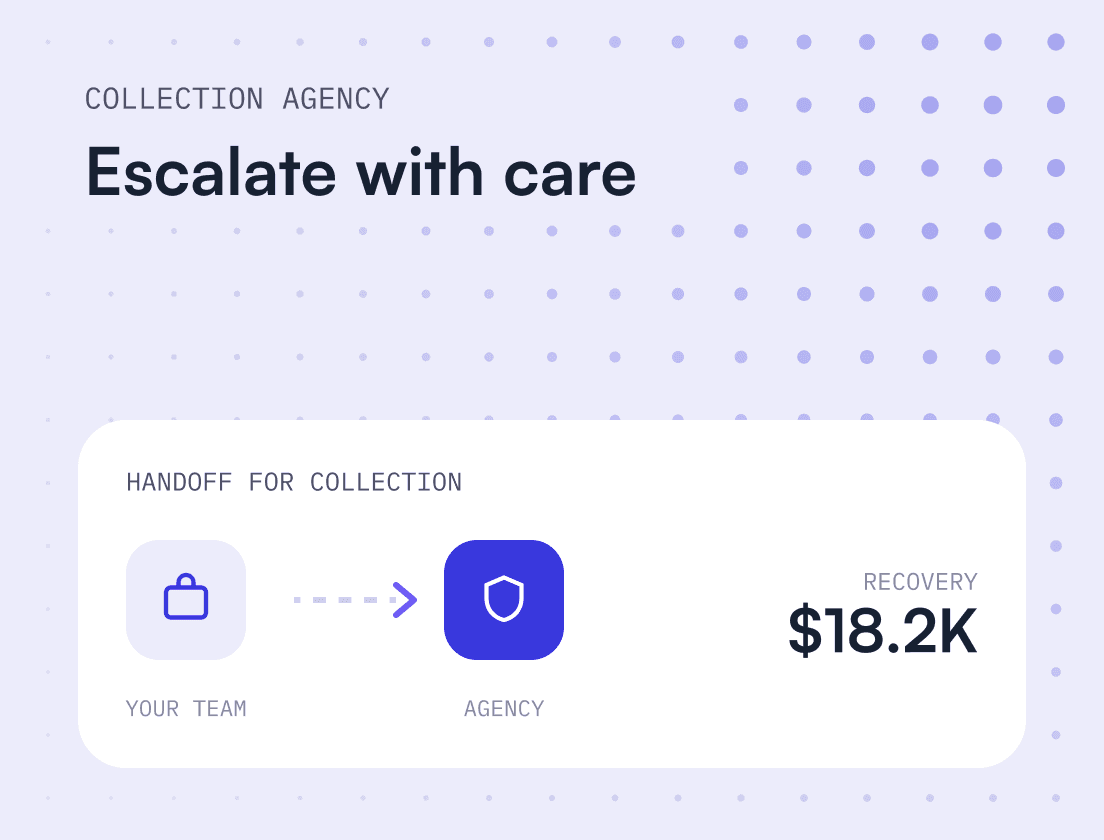
A collection agency is a company that recovers unpaid debts on behalf of a creditor, usually in exchange for a share of whatever it collects. For B2B companies, it’s often seen as the natural next step once an invoice is badly overdue. In practice, it should be one of the last.
Handing an account to collections costs you a large cut of the money you recover, takes the conversation out of your hands, and usually ends the customer relationship for good. Most overdue invoices can be recovered long before that point, with a clear process, the right follow-ups and a bit of flexibility.
This guide explains what collection agencies do, how they get paid, what they really cost you, when using one makes sense, and what to try first. In this guide, you’ll learn:
- What Is a Collection Agency?
- How Do Collection Agencies Work and Get Paid?
- What a Collection Agency Really Costs Your Business
- When Is a Collection Agency the Right Call?
- What to Try Before Sending an Account to Collections
- How to Choose a Collection Agency If You Need One
- How Upflow Helps You Keep Accounts Out of Collections
What Is a Collection Agency?
A collection agency is a third-party company that contacts customers about unpaid debts and tries to recover the money on the creditor’s behalf. Businesses typically bring one in once an invoice is around 90 days past due and their own attempts to collect have stalled.
There are a few types worth knowing:
- First-party collections: collection work done in your own company’s name, either by your in-house team or by an outside provider acting as part of your team. The customer still deals with you.
- Third-party collection agencies: outside firms that contact your customer in their own name. This is what most people mean by a collection agency, and it’s the point where the customer knows the account has been escalated.
- Collection law firms: agencies run by licensed attorneys, which can file lawsuits and enforce judgments.
- Debt buyers: companies that buy unpaid debts for a fraction of their value and keep whatever they collect.
It also helps to know the difference between consumer and commercial collections. Most of what you read online about collection agencies is written for consumers, because individuals are protected by the Fair Debt Collection Practices Act (FDCPA). That law covers personal, family and household debts. It doesn’t cover debts owed by one business to another. A commercial collection agency, sometimes called a B2B collection agency, works under state licensing rules, contract law and the terms of your agreement with the customer instead.
How Do Collection Agencies Work and Get Paid?
Once you place an account with an agency, it takes over contact with your customer. It typically sends written notices, makes repeated calls, sometimes through an AI-powered call center, uses databases to track down customers who have gone quiet, and reports back to you on progress. If the customer still won’t pay, a collection law firm or attorney can take legal action, though that usually means extra fees.
Most agencies are paid in one of three ways:
| Fee model | How it works | What it usually means for you |
|---|---|---|
| Contingency fee | The agency keeps a percentage of what it recovers | No cost unless it collects, but a large share of every dollar recovered |
| Flat fee | You pay a fixed amount per account | Predictable, but you pay even if nothing is recovered |
| Debt sale | A debt buyer purchases the debt outright | Fast, but you get only a fraction of the invoice value |
Contingency fees are the most common model. According to the U.S. Chamber of Commerce, agencies often keep between 25% and 50% of what they recover, and older or more difficult accounts carry higher rates. In other words, the longer you wait to act on an overdue invoice, the more of it you give away.
What a Collection Agency Really Costs Your Business
The fee is the cost you see. The bigger costs are the ones that don’t appear on the agency’s invoice.
A large share of the money you’re owed
At a 30% contingency rate, recovering a $20,000 invoice means $6,000 goes to the agency. That’s money for work your own team could often have done earlier, faster and with more context: emails, letters and phone calls.
The customer relationship
Sending an account to collections tells the customer the relationship has broken down. An agency doesn’t know the account’s history, the person who signed the contract, or the internal approval that’s been stuck for weeks. Its job is to recover money, not to protect future revenue. For a B2B company, that customer may have been worth far more in renewals and expansion than the invoice you’re chasing, and many won’t come back after being sent to collections.
Control over your brand
A third-party collector speaks for your business, but in its own tone and on its own schedule. If its approach is aggressive, your customer won’t remember the agency’s name. They’ll remember yours, and so might the people they talk to.
Time and visibility
Once an account is placed, you depend on the agency’s reporting to know what’s happening. Disputes that could have been resolved with a quick call to the right contact can drag on for months, and some balances are never recovered at all, becoming bad debt anyway.
Many late B2B payments aren’t caused by customers who refuse to pay. They’re caused by invoices sent to the wrong person, missing purchase order numbers, unclear terms, disputes no one picked up, or payment processes that make paying harder than it should be. A collection agency doesn’t fix any of that. It just puts pressure on the customer after the damage is done.
When Is a Collection Agency the Right Call?
A collection agency makes sense when the relationship is already over and you’ve done everything you reasonably can yourself. That usually means at least one of these is true:
- The customer is unreachable. Emails bounce, calls go unanswered, and no one at the company responds to any channel.
- The customer refuses to pay an amount that isn’t in dispute, despite a clear escalation from reminders to a final notice.
- The invoice is well past 90 days overdue and recent attempts have produced no response or payment plan.
- The customer is in serious financial trouble, such as repeated failed payments or signs of insolvency, and you need to act before other creditors do.
- You’ve already decided to end the relationship and need a professional to recover what’s left.
If none of these apply, it’s almost always too early. The customer is still reachable, the relationship still has value, and you still have options that cost far less than an agency’s cut. Rules on collections and legal action vary by state, so check with your legal counsel before taking legal steps.
What to Try Before Sending an Account to Collections
Before you hand an account to anyone else, work through these steps. Each one gives the customer a clear chance to pay, and together they recover most overdue invoices.
1) Check the invoice and the basics
Confirm the invoice went to the right contact, includes any required PO or reference number, and matches the contract. A surprising number of “late payers” simply never received a valid invoice. Fixing it is often all it takes.
2) Send consistent reminders
Follow a set reminder schedule that starts before the due date and continues after it. Clear, polite payment reminders and well-written collection emails resolve most delays caused by oversight.
3) Pick up the phone
If emails go unanswered, call. A short collection call with the right person often uncovers the real issue, whether that’s a dispute, an approval delay or a cash flow problem, in minutes.
4) Bring in the account owner
Your sales or customer success contact usually has a better relationship with the customer than finance does. A message from them can unblock payment without any tension, and they’ll often know who to talk to.
5) Offer a payment plan
If the customer is struggling, a written payment plan gets money flowing again and keeps the relationship intact. Recovering the full amount over a few months is usually better than giving a quarter or more of it to an agency.
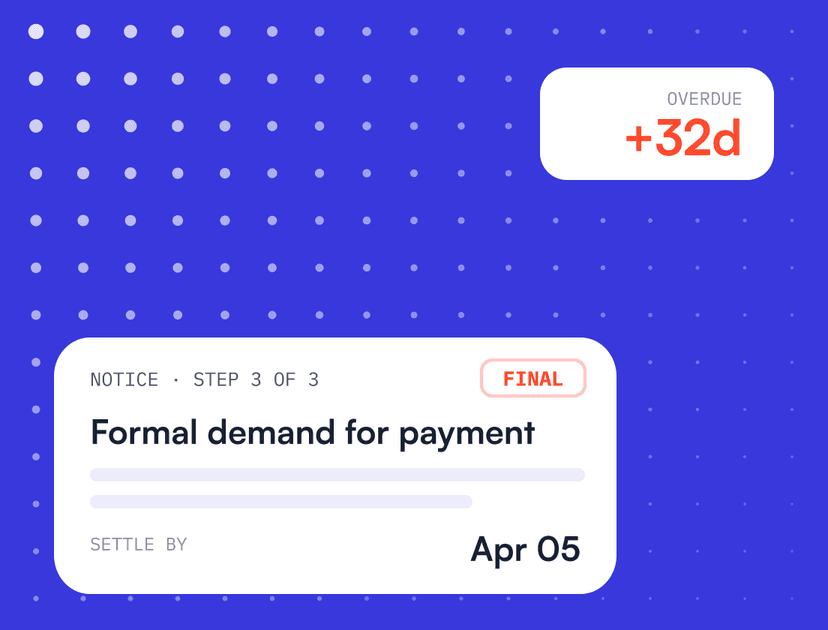
6) Send formal collection letters
Move to written notices that escalate step by step. Our collection letter samples run from a formal reminder to a final notice before legal action. You can also apply late fees, if your contract allows them.
7) Restrict services and set a final deadline
For recurring services, pausing access until the balance is paid is often the most effective lever you have, provided your terms allow it. Pair it with a final deadline, so the customer knows exactly what happens next.
Only once all of this has failed should an agency enter the picture. For accounts that need ongoing professional help rather than a one-off recovery, receivable management services and their alternatives are also worth comparing.
How to Choose a Collection Agency If You Need One
If you do need a collection agency, choose carefully, because it will speak to your customer on your behalf.
- Choose a commercial specialist. For B2B debts, look for an agency that specializes in commercial collections and, ideally, your industry. Consumer collection tactics rarely work well on businesses.
- Check licensing and insurance. Make sure the agency is licensed where it operates, and bonded and insured.
- Get the full fee schedule in writing. Ask about contingency rates by account age and size, any minimum fees, and the additional costs if legal action is needed.
- Ask how it communicates. Its tone and practices will reflect on your business, so ask to see example letters and call scripts.
- Look at reporting. A good agency gives you clear, regular updates, and ideally an online portal to track each account.
- Start small. Place a few accounts first and judge the results before sending more.
How Upflow Helps You Keep Accounts Out of Collections
The best way to avoid paying a collection agency is to make sure few accounts ever reach that point. Upflow is a Financial Relationship Management platform that helps B2B finance teams get paid on time without damaging the relationships behind each invoice. It’s also G2’s highest-rated Credit & Collections software in the Mid-Market category.
Upflow automates reminders and escalations based on how overdue each invoice is, gives customers a simple way to pay, and keeps finance, sales and customer success working from the same account history. Disputes and missed payments get picked up early, while the conversation is still easy, rather than months later by a stranger.


Alex Louisy
Co-founder and CEO of Upflow
Alex is the Co-founder and CEO of Upflow, where he leads the company’s mission to revolutionize how B2B businesses manage their cash flow. Backed by top-tier investors like Hedosophia, YCombinator, Hexa, and Lorimer Ventures, with more than $25m in funding to date, he is a strong advocate for financial transparency and operational excellence, bringing a founder’s perspective to the biggest challenges and opportunities in modern revenue management.
Alex developed Upflow’s widely recognized “5 Maturity Stages of Cash Collection” framework, a model that has helped hundreds of companies build scalable and efficient finance operations. He also co-hosts The Growth-Minded CFO podcast, where he engages with finance and business leaders on innovative approaches to financial leadership. His thought leadership explores the intersection of business strategy, financial discipline, and organizational growth.
As a regular contributor to Upflow’s blog, Alex shares insights on leadership, scaling SaaS businesses, and the future of B2B finance. His writing helps founders, CFOs, and revenue leaders make smarter decisions and build financially resilient companies.

Summary

Shared
Frequently Asked Questions
Can’t find what you’re looking for?
Ask AI
Most collection agencies charge a contingency fee, keeping a percentage of the money they recover. According to the U.S. Chamber of Commerce, that’s often between 25% and 50%, with higher rates for older or harder-to-collect accounts. Some agencies charge a flat fee per account instead, and legal action usually costs extra.
Most businesses consider a collection agency once an invoice is around 90 days past due, and only after reminders, calls, collection letters and a final notice have failed. Acting earlier with your own follow-ups usually recovers more money and keeps the relationship intact.
Yes. Commercial, or B2B, collection agencies specialize in recovering debts owed by businesses. These debts fall outside the Fair Debt Collection Practices Act, which covers consumer debts, but agencies still have to follow state licensing rules and other applicable laws.
In most cases, yes. Being contacted by a third-party collector signals that the relationship has broken down, and many B2B customers stop working with a supplier afterwards. That’s why it should be a last resort, used only once you’ve accepted the relationship is over.
A collection agency contacts the customer and tries to recover the debt through notices, calls and negotiation. A collection attorney, or collection law firm, can also file a lawsuit, obtain a judgment and enforce it. Attorneys are usually involved only when an agency’s efforts have failed and the amount justifies legal costs.
First-party collections are done in your own company’s name, so the customer still deals with you. Third-party collections are handled by an outside agency in its own name, which makes it clear to the customer that the account has been escalated.
Related articles